


Consultation
Contact us now and get logistics consulting from our experienced specialists:
You might be interested
Recent articles
Oct. 8, 2025
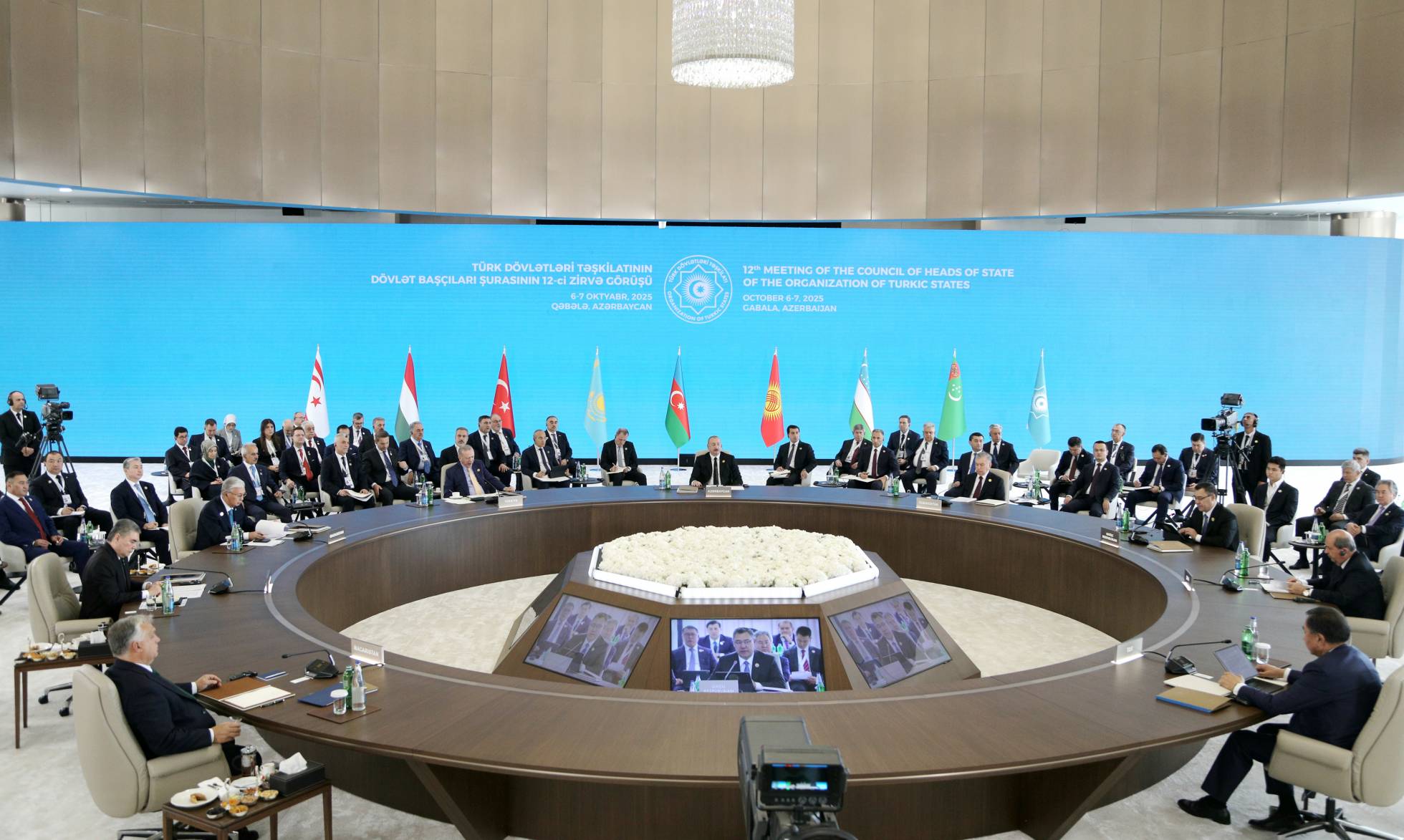
President Ilham Aliyev Highlights Azerbaijan’s Role as a Strategic Transport and Logistics Hub at the OTS Summit in Gabala
At the 12th Summit of the Organization of Turkic States (OTS), held on October 7 in Gabala, President of Azerbaijan Ilham Aliyev underscored the country’s growing significance as a central link in Eurasian transport and logistics corridors, emphasizing the importance of deeper integration among Turkic states through connectivity and trade.
Azerbaijan — a Bridge Between Türkiye and Central Asia
In his address, President Aliyev stated that Azerbaijan plays a key role in both the East–West and North–South transport corridors, serving as a vital bridge between Türkiye and Central Asia. He noted that Azerbaijan’s active participation in major transport projects has transformed it into an indispensable logistics hub across geographic and economic dimensions.
“Azerbaijan is an active player in the East-West and North-South transport corridors, serving as a vital bridge between Türkiye and Central Asia across geographic, economic, transport, and other domains,” the President said.
Rapid Growth of the Middle Corridor
President Aliyev highlighted the remarkable growth of cargo movement through the Middle Corridor, which increased by nearly 90% since 2022, accompanied by a significant reduction in transit time. This, he said, reflects the success of coordinated infrastructure and policy measures among Turkic states.
Azerbaijan’s strong infrastructure base — including the Caspian Sea’s largest trade fleet, the Port of Alat (soon to reach a capacity of 25 million tons per year), the Baku–Tbilisi–Kars railway, nine international airports, and the region’s largest cargo airline — underpins this success and reinforces Azerbaijan’s role as a gateway between Europe and Asia.
Zangezur Corridor: A New Artery of Connectivity
A major highlight of President Aliyev’s remarks was the announcement of the Zangezur Corridor’s opening, described as one of the most important outcomes of the recent Washington summit.
“This corridor is significant as a new transport artery and serves as a second route within both the Middle Corridor and the North-South Corridor,” the President noted.
The Zangezur Corridor is expected to enhance interconnectivity among Turkic states and further integrate the South Caucasus into regional and global transport networks. It will create a continuous logistics chain from Central Asia through Azerbaijan and Türkiye to Europe.
Energy and Green Transport Integration
President Aliyev also connected transport development with energy security and sustainability, announcing that Azerbaijan is working with Turkic partners to develop a green energy corridor linking Central Asia, Azerbaijan, Türkiye, and Europe. This initiative complements ongoing efforts to expand renewable energy production — projected to reach 40% of total generation by 2030.
A Vision for Deeper Economic Integration
Beyond infrastructure, the Azerbaijani President emphasized that investment and cooperation among Turkic countries are expanding. Azerbaijan has already invested over $20 billion in the economies of fraternal states, including the establishment of joint investment funds with Uzbekistan, Kazakhstan, and Kyrgyzstan to finance future development projects.
“These initiatives serve to deepen economic integration within the Turkic world, strengthening cooperation among our friendly and brotherly nations in energy and transport, and ensuring the sustainable development of our region,” Aliyev said.
Azerbaijan’s Leadership in Regional Logistics
The President’s speech reinforced Azerbaijan’s role as both a connector and coordinator in Eurasian transport. With multimodal infrastructure, strategic investments, and political will, the country continues to position itself as a leading logistics hub linking the Turkic world to Europe, the Middle East, and Asia.
As Azerbaijan assumes the chairmanship of the Organization of Turkic States, the focus on connectivity, logistics, and sustainable transport development is expected to remain at the forefront of its regional agenda — building on the momentum of projects like the Middle Corridor and the Zangezur Corridor.
July 6, 2023
International Trade: Underwater Reefs
Transporting goods across borders involves global competition and multiple levels of requirements. Optimal solutions, staying up to date with strategies and rules, and using the latest technology are essential for international market success.
According to analysts and experts in this field, the most important points are the following:
Requirements and procedures in this area are constantly changing, and it is necessary to know about changes in international norms and rules firsthand in order to avoid delays in both production and sale of goods. Regular review of these rules will reduce their impact on exports to zero.
Don't forget that all documents must be in order, always! Echoing the previous principle, the paperwork required for global delivery can become an obstacle if you do not have up-to-date knowledge of international legal norms. Incorrect or incomplete documents tend to delay shipment and implementation, creating the risk of cancellation and damage to the company's reputation.
Using free trade zones while adhering to the standards and guidelines of international trade agreements, both in the production and distribution of goods, helps to achieve a regional advantage for your business.
In the international trade system, innovative technologies open up new opportunities, and this is an indisputable fact. Through the use of technology, some costs are reduced, which, in turn, stimulates the growth of commercial activity. Here we are talking about transport costs, logistics costs, costs for port services and customs clearance, for obtaining the necessary information, and transaction costs. A striking example is artificial intelligence and self-driving cars, which help reduce transportation costs.
Of course, the important point is not so much the choice of the market for offering products, as the adaptation to it. You will need to analyze it, make sure it fits your business, determine how easy it is to reach it and determine whether it is worth it.
International trade is a complex activity, so it is important for exporting companies to keep these best practices in mind as well as take advantage of reduced logistics costs to increase market share and succeed in new ones.
June 14, 2023
6 Essential Tips for Safely Transporting Fragile Goods
Proper packaging of goods, especially for fragile goods, is critical to successful delivery. Fragile goods come in many forms and require special equipment, handling, and handling conditions. These include glassware, laboratory equipment, musical equipment, jewelry, household items, china, valuable collectibles, or liquid goods. We present to your attention 6 essential tips for safely transporting this category of goods.
1. Packaging is selected according to the characteristics of the cargo. Filling voids in the tare with soft material helps secure the cargo during transport. This method helps reduce the impact of bumps and shocks.
2. When packing and loading fragile goods, regardless of the type of transport, consistency should be strictly followed: placing heavier loads lower reduces the risk of crushing or damaging smaller, more fragile goods.
3. Choosing the optimal type of transport that ensures timely and reliable delivery depends on the characteristics of the cargo.
4. Packing of personal items. No matter how big or small the items are, if they are fragile, they must be packed properly and efficiently. The use of materials such as bubble wrap, fabric, or cardboard will protect the goods, the cargo in the box will additionally be strapped, taped, etc. it is recommended to provide with
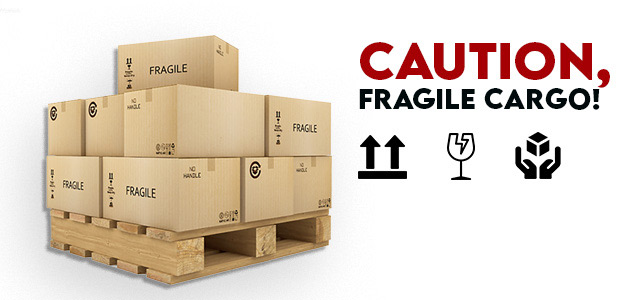
5. Marking of the parcel. The presence of clear labels such as "handle with care" or "fragile goods" is a reminder that this group of goods requires special handling.
6. Loading and unloading operations are carried out manually or using special equipment only by experienced workers.
However, even with the most careful organization of transportation, unexpected circumstances can arise that cause damage or loss of cargo. It is in such cases that there is a category of cargo insurance, which is especially important during the transportation of fragile goods. Insurance sums guarantee the client compensation for the value of the property.