Transporting petroleum products involves more than moving cargo from one location to another.
Every shipment requires careful planning, proper documentation, compliance with local and international regulations, and the selection of a transport method that matches the product, volume, and delivery requirements.
Many guides focus almost entirely on regulations, making them difficult for logistics and procurement teams to use in practice. Others focus only on transportation methods while overlooking compliance requirements that can significantly affect transit times and operational costs.
The reality is that successful petroleum transport requires both operational planning and regulatory compliance.
This article looks at the transport modes commonly used for petroleum products, the compliance considerations that matter in cross-border movements, and the factors that should be evaluated when selecting a transport solution.
Understanding Petroleum Product Transport
Petroleum logistics covers a wide range of products, including:
- Crude oil
- Diesel fuel
- Gasoline
- Jet fuel
- Lubricants
- Base oils
- Bitumen
- Petrochemical products
Each product has different handling requirements, hazard classifications, storage conditions, and transportation restrictions.
As a result, transport planning should begin with a clear understanding of the product being moved and the applicable regulations.
Choosing the Right Transport Mode
The most commonly used transport methods for petroleum products are:
- Road transport
- Rail transport
- Pipeline transport
Each option offers different advantages depending on the shipment profile.
Road Transport
Road transport remains one of the most flexible solutions for petroleum distribution.
Tank trucks can provide direct delivery between terminals, storage facilities, industrial sites, and end users.
Advantages
- Flexible routing
- Door-to-door delivery
- Suitable for regional distribution
- Faster deployment for smaller volumes
Considerations
- Higher cost per ton for long-distance movements
- Driver and vehicle availability
- Border crossing delays
- Road restrictions for hazardous cargo
Road transport is often used for final delivery stages or shorter regional routes where direct access is required.
Rail Transport
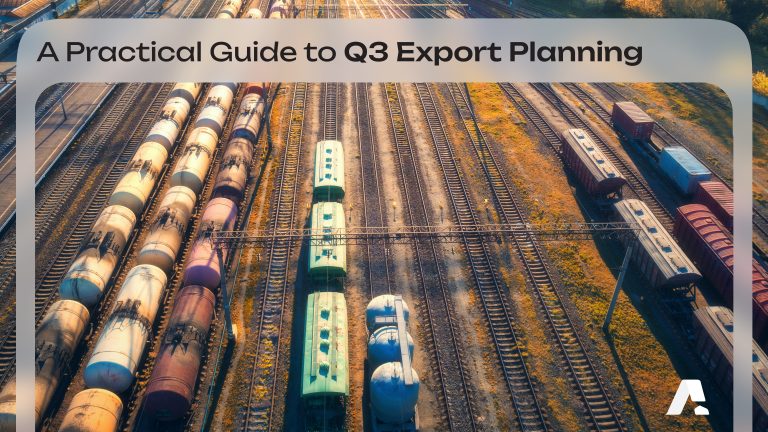
Rail freight plays an important role in petroleum logistics, particularly for large-volume shipments.
Tank wagons can move significant quantities of product over long distances while reducing reliance on road networks.
Advantages
- Suitable for large shipment volumes
- Competitive costs over long distances
- Predictable schedules
- Reduced road congestion exposure
Considerations
- Terminal infrastructure requirements
- Rail network availability
- Additional handling at origin and destination
- Equipment availability
For many industrial customers and energy companies, rail provides an effective solution for regular bulk movements across national and regional markets.
Pipeline Transport
Pipelines remain one of the most efficient methods for transporting large volumes of petroleum products.
Once infrastructure is available, pipelines can support continuous product movement with minimal handling.
Advantages
- High transport capacity
- Continuous operation
- Lower handling requirements
- Reduced weather exposure
Considerations
- Limited route flexibility
- Significant infrastructure investment
- Dependence on existing networks
- Product compatibility requirements
Pipeline transport is generally used for established energy corridors rather than individual shipment planning.
Compliance Requirements That Matter
Compliance is often viewed as a separate function from logistics planning. In reality, both should be considered together.
Incomplete documentation or regulatory errors can delay cargo regardless of how well the transport operation itself is organized.
For cross-border petroleum movements, several areas require particular attention.
Product Classification
The correct classification of petroleum products is essential.
Transport requirements differ depending on:
- Hazard classification
- Flash point
- Packaging requirements
- Storage conditions
- Environmental regulations
Incorrect classification can lead to delays, inspections, fines, or rejected shipments.
Transport Documentation
Documentation requirements vary by country and transport mode.
Typical requirements may include:
- Commercial invoices
- Packing documentation
- Safety Data Sheets (SDS)
- Transport declarations
- Customs documentation
- Certificates of origin
Documentation should be reviewed before shipment departure rather than during transit.
Vehicle and Equipment Compliance
Tank trucks, rail tank wagons, and storage equipment must meet applicable technical and safety standards.
Inspection certificates, maintenance records, and equipment approvals may be required depending on the route and jurisdiction.
Customs and Border Procedures
Cross-border shipments often experience delays due to documentation issues rather than transportation problems.
Early preparation and accurate declarations can significantly reduce border processing times.
Selecting a Route
Choosing a route involves more than finding the shortest distance.
Several operational factors should be evaluated.
Product Type
Different petroleum products may face different transport restrictions.
Storage conditions, hazard classifications, and handling requirements can influence route selection.
Shipment Volume
Volume often determines which transport mode is most economical.
Smaller shipments may favor road transport, while larger and recurring volumes often benefit from rail or pipeline solutions.
Delivery Schedule
Urgent deliveries may require different routing decisions than regular replenishment shipments.
Transit reliability should be considered alongside transit speed.
Border Complexity
Routes involving multiple border crossings may increase documentation requirements and inspection risks.
Understanding local procedures is an important part of transport planning.
Infrastructure Availability
The best route on paper may not be practical if suitable terminals, rail connections, storage facilities, or equipment are unavailable.
Infrastructure assessments should form part of every transport plan.
Balancing Cost, Risk, and Reliability
Many petroleum transport decisions focus heavily on freight costs.
However, cost should not be evaluated in isolation.
Businesses should also consider:
- Delivery reliability
- Safety requirements
- Transit predictability
- Equipment availability
- Regulatory exposure
- Inventory planning
A lower freight rate may not provide value if delays disrupt production schedules or customer commitments.
The most effective transport plan is usually the one that balances cost, compliance, and operational reliability.
Conclusion
Petroleum product transport requires careful coordination between logistics planning and regulatory compliance.
Road, rail, and pipeline transport each serve important roles depending on the product, shipment volume, route requirements, and delivery schedule.
Understanding the compliance requirements that directly affect cross-border movements can help reduce delays, improve planning, and support more predictable operations.
For logistics managers, procurement teams, and industrial companies, the goal is not simply moving cargo. It is moving cargo safely, compliantly, and according to schedule.
At Alliance Logistics, we support industrial and energy-sector customers with transport planning, documentation support, customs coordination, and route development for petroleum and energy-related cargo movements.
📞 +994 51 215 70 70 | +994 12 599 11 39
📧 [email protected]
🌐 alliance.net